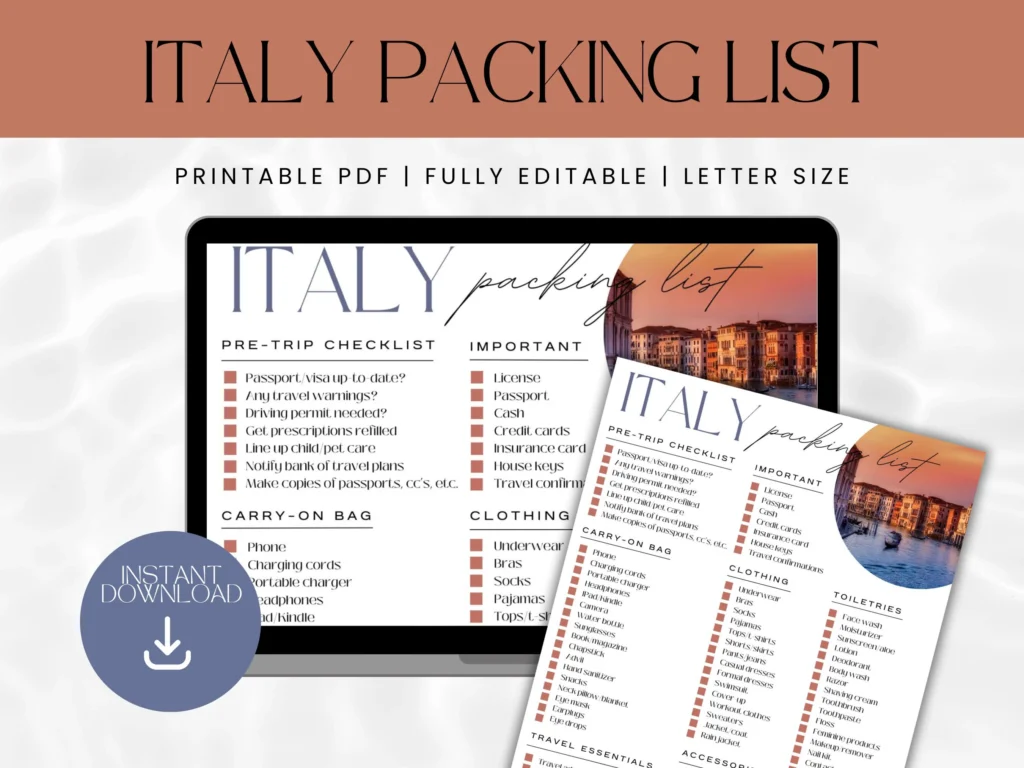
I once packed six pairs of shoes for a two-week Europe trip. Six. Used two. Learning to pack smart took a few over-stuffed suitcases and one very painful cobblestone-street walk in the wrong footwear. This Europe packing checklist is basically everything I wish someone had handed me before that trip.
Two weeks across multiple countries means unpredictable weather, different plug types, and a lot of walking. Get the basics right and everything else falls into place.
Why a Proper Packing List Matters for Europe
A solid Europe packing checklist saves you from both overpacking (extra baggage fees, sore shoulders) and underpacking (buying overpriced essentials once you’re already there).
Europe’s weather can swing wildly even within a single week, especially if you’re covering multiple countries. Layering is your best friend here, not bulk.
Clothing Essentials
- 4-5 tops, mix-and-matchable, not all the same color scheme
- 2 pairs of trousers or jeans, plus one dressier option for nicer dinners
- A packable rain jacket — Europe’s weather doesn’t send warnings
- One warm layer even in summer, evenings get cooler than people expect
- Comfortable walking shoes, already broken in — never new ones
Quick answer: A 2-week Europe packing checklist should include 5-6 mix-and-match tops, 2-3 bottoms, a rain jacket, comfortable broken-in shoes, and a universal power adapter — packing light matters more than packing “enough.”
Documents and Money
- Passport with at least 6 months validity remaining
- Printed and digital copies of hotel bookings and visa (if applicable)
- A mix of cash and 1-2 cards, ideally ones with no foreign transaction fees
- Travel insurance documents, physical or saved offline
Tech Essentials
- Universal power adapter — Europe mostly uses Type C/F, but UK uses Type G
- Portable power bank for long train or flight days
- A local SIM or eSIM sorted before landing, saves hassle later
What People Often Forget
I’ve noticed most first-timers forget a padlock for hostel lockers, or underestimate how much walking they’ll actually do — bring blister plasters, seriously, they’re a lifesaver.
- Travel-size laundry detergent sheets, for longer trips
- A reusable water bottle, many European cities have public refill points
- Earplugs for train travel or noisy hostels
[link to related guide about Europe train travel here]
Packing by Season
Summer (Jun-Aug): Light fabrics, one light jacket for evenings, sunscreen Spring/Autumn (Mar-May, Sep-Nov): Layers are essential, a proper rain jacket Winter (Dec-Feb): Thermal layers, waterproof boots, a proper wool coat
My Honest Opinion
Packing cubes changed my whole approach to trips like this. I used to just stuff everything into one bag and dig through chaos every morning — cubes keep things sorted by category, and honestly it’s a small thing that makes a surprisingly big difference over two weeks.
FAQs
How many outfits do I need for a 2-week Europe trip? You don’t need 14 different outfits — 5-6 versatile tops and 2-3 bottoms mixed together easily cover two weeks with laundry done once mid-trip.
Do I need different adapters for different European countries? Mostly no — Type C/F covers most of mainland Europe, though the UK, Ireland, and Malta use Type G.
Is it better to pack a suitcase or backpack for Europe? Depends on your itinerary — cobblestone streets and train stations without elevators can make wheeled suitcases tricky; a backpack offers more flexibility.
Should I pack formal clothes for Europe? One slightly dressier outfit is enough for nicer restaurants — Europe is generally casual outside upscale dining.
What’s the biggest packing mistake for Europe trips? Overpacking shoes and clothes “just in case” — most travelers end up using half of what they bring.
Conclusion
Getting your Europe packing checklist right isn’t about packing more — it’s about packing smart. Layer well, bring broken-in shoes, and leave room in your bag for the inevitable souvenir or two you’ll pick up along the way.
APPROVED
Keep the memory. Verify the moving details.
Use this guide as a practical route note, then reconfirm prices, schedules, entry rules and availability close to departure.

Admin
Turzico editors turn destination research into practical, warm and easy-to-use travel notes.